

Shortly before his death, this legendary musician received a Lifetime Achievement Award from the Alberta Recording Industry Association. In Edmonton, a park was named in his honor.
Gaby Haas carved his path across generations. He was not only a renowned musician but also a radio and television host, music store owner, restaurateur, and a “walking encyclopedia” of folk music. Read more on edmontonski.
A Life Dedicated to Music and Broadcasting
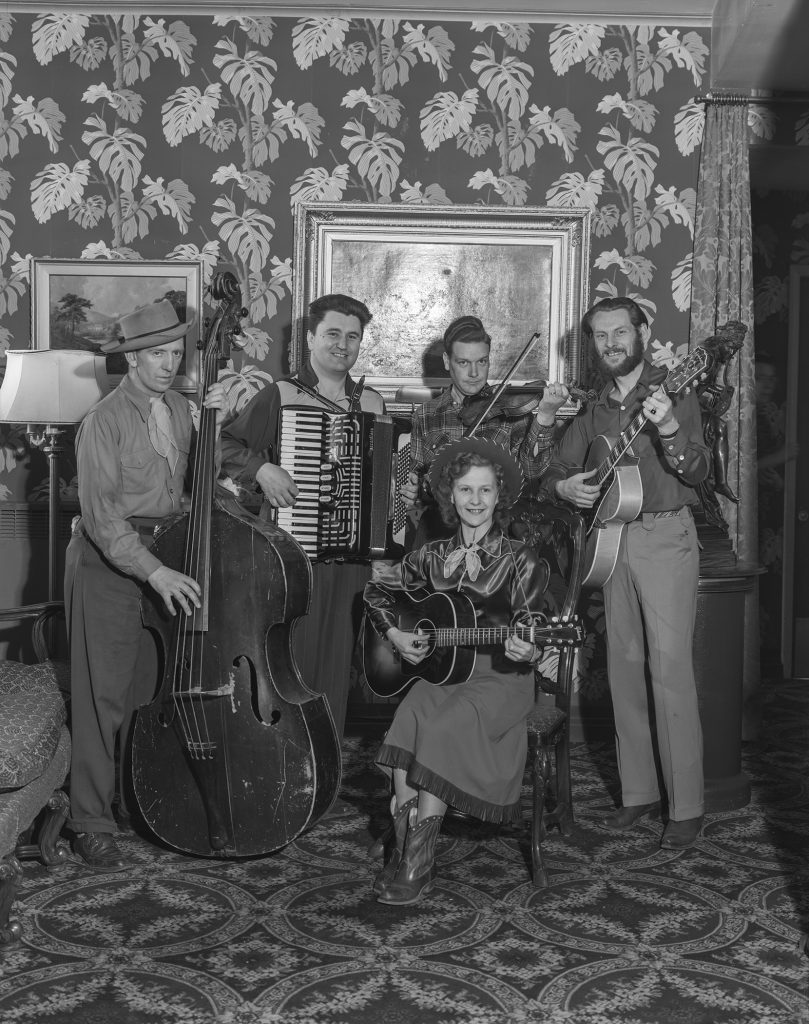
When television became common in households, Haas dedicated half of his life to hosting. For over 40 years, he led a Sunday radio program featuring traditional European music. It became one of the longest-running programs worldwide with a consistent airtime, day of broadcast, and host.
As an accordionist, Haas released over 50 albums, 55 singles, and performed more than 11,000 dances during his lifetime. His personal collection included 50,000 records. In Edmonton, his music store was located next to a restaurant where patrons could dine and dance.
Early Life
Gaby Haas was born in Czechoslovakia in 1920. From a young age, he showed immense musical talent. By the time he was a child, he was fluent in six languages. His father, a German social democrat and lumberyard owner, and his mother, a Jewish artist, fled Nazi persecution in 1939, taking with them only an accordion, some watches, and a few record reels.
After arriving in Canada, the Haas family settled on a farm near Loon Lake, Saskatchewan. It was there that young Gaby began playing his accordion at local dances, quickly earning invitations to radio broadcasts. A year later, the family moved to Edmonton, where Gaby joined the violinist Amin Ghanam’s band after completing school.
Musical Career and Development
In 1946, Haas began leading the “Alberta Ranchhouse” program on CBC. A visit from Frankie Yankovic, the American “King of Polka,” at an Edmonton pavilion inspired Gaby to further pursue his passion for music.
In 1950, Haas founded The Barnhouse Gang. By the 1960s, he was performing with the CFRN House Band alongside notable figures like Sandy Richards and Hank Smith. Olaf Sveen, a longtime friend and colleague, noted that Haas played the piano accordion in a style uniquely his own.
Sveen also recalled their shared time in the studio, surrounded by memorabilia. Haas delighted in playing music unfamiliar to most Albertans, incorporating Romanian waltzes, Swiss yodels, and Bavarian polkas into his repertoire.
In 1986, a televised tribute highlighted Haas’ significant influence on Edmonton’s music scene. His contributions popularized polka and waltz across Canada. The National Film Board even produced a documentary about him, opening doors for various musical groups.
A Legacy of Dedication
Gaby Haas often said:
“As long as I can lift my accordion off the floor, I will never give up.”
These words became particularly poignant when Haas fell ill in 1986 and could no longer travel. In 1987, he passed away from brain cancer, which he had battled for some time.
Haas had planned to retire in 1989, but his untimely death cut those plans short. This extraordinary musician devoted half of his life to radio hosting, recording, and television performances.
Shortly before his passing, Haas received a Lifetime Achievement Award from the Alberta Recording Industry Association. In 2003, the city of Edmonton honored his memory by naming Highland Park after him.
Friends of the musician often remarked that Edmontonians would still dance to polka long after rock and twist faded from popularity because polka comes “from the heart, not the head.”
Though many years have passed since his death, young people today continue to listen to the recordings of Haas’ performances, preserving his enduring legacy.